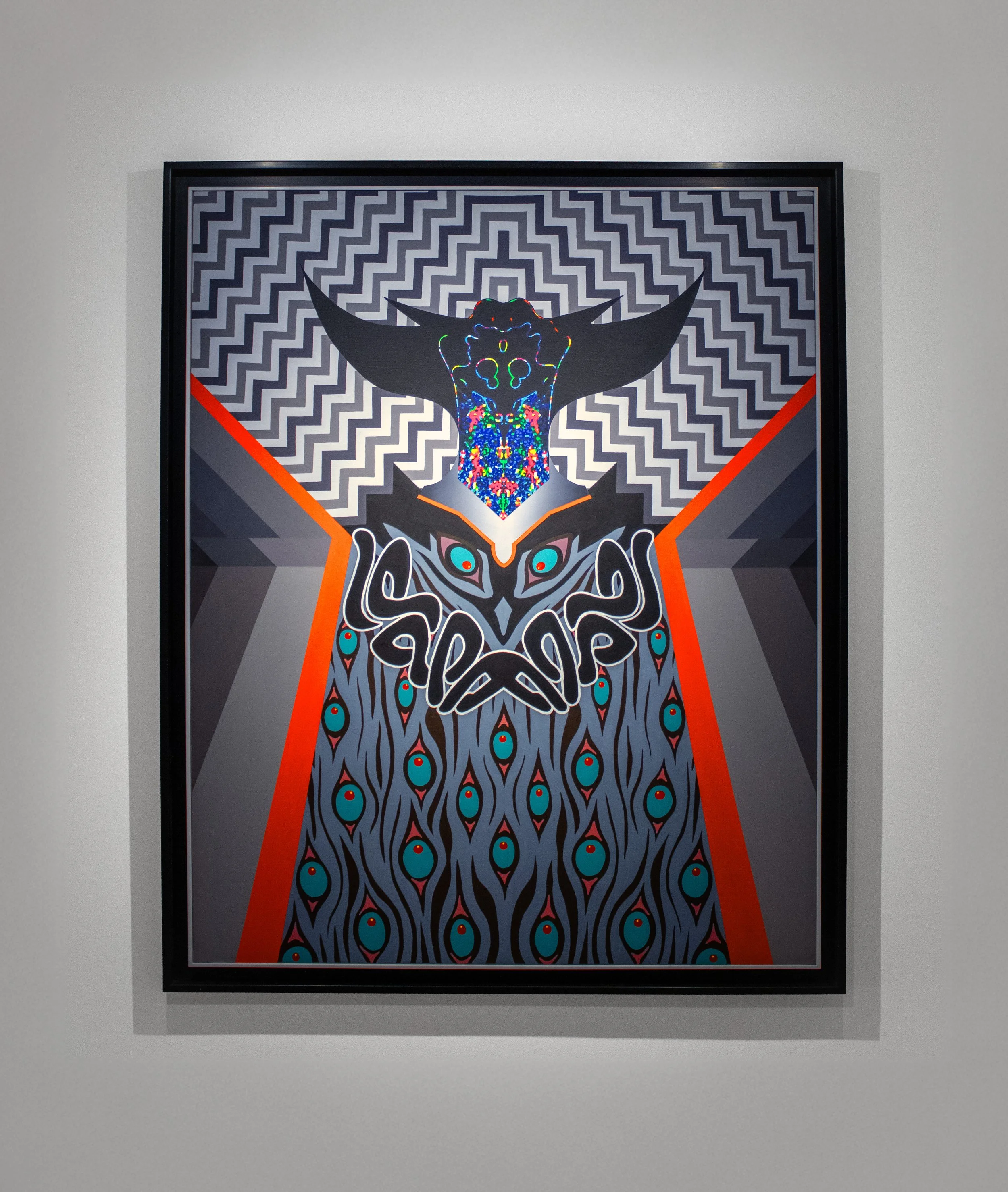
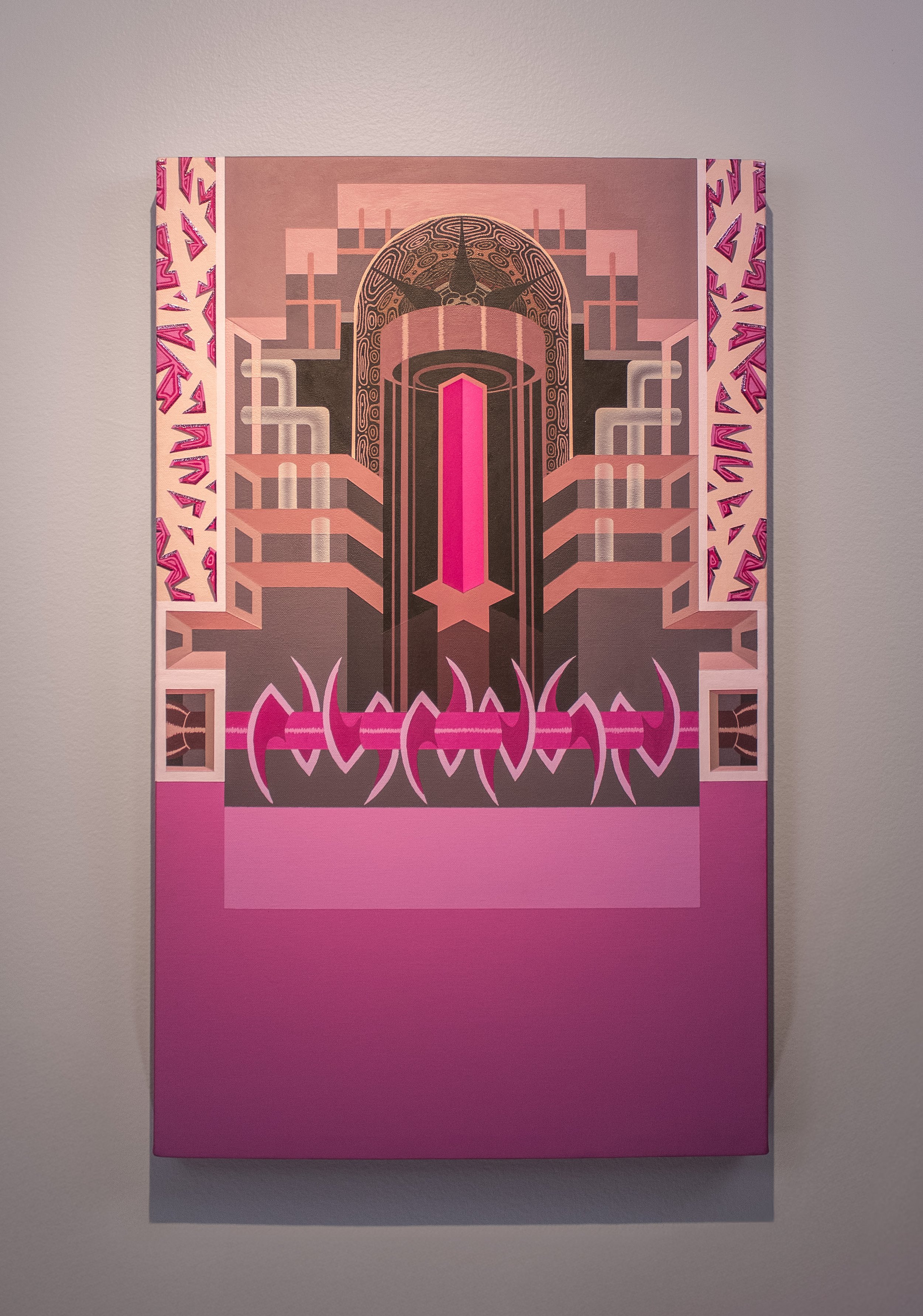
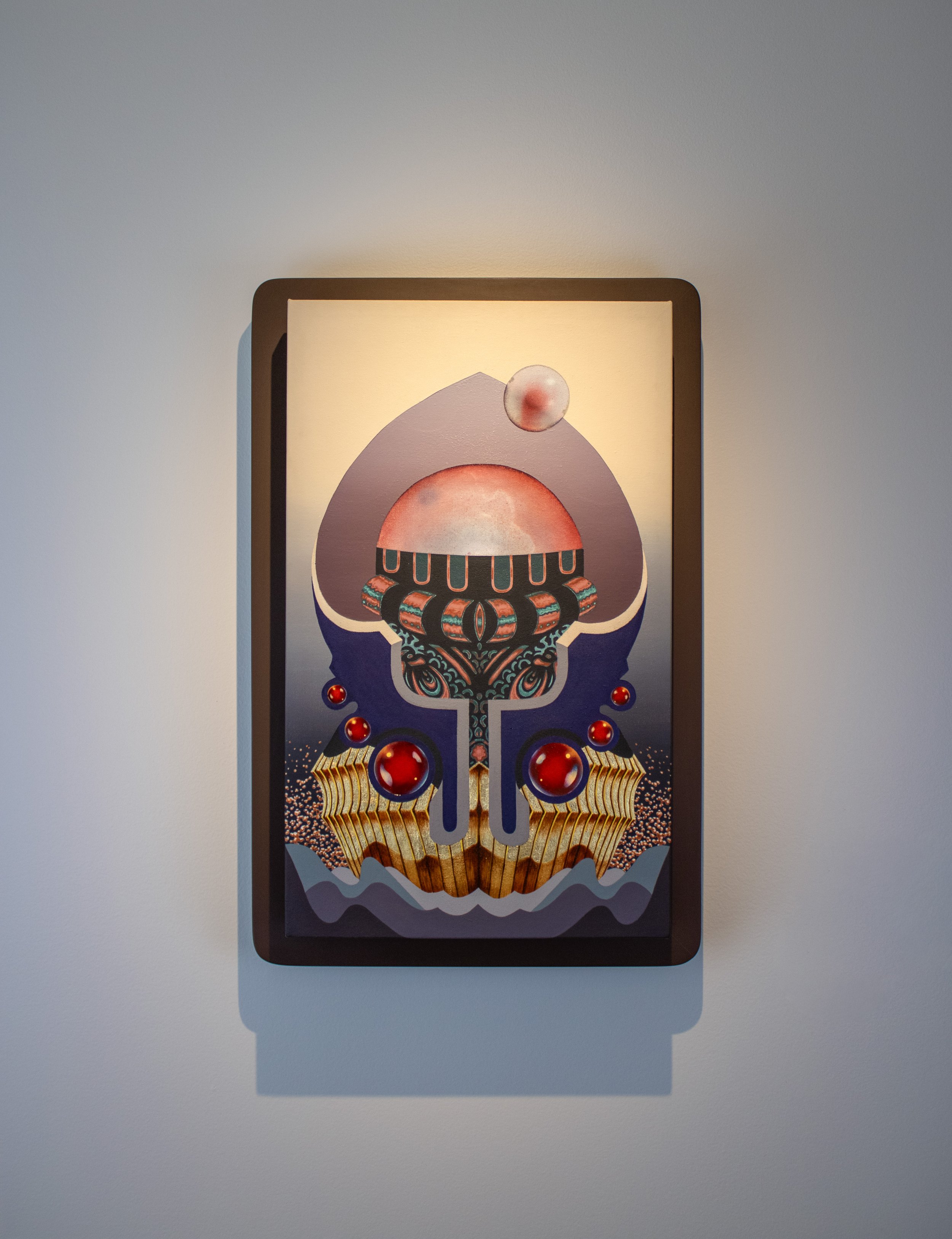
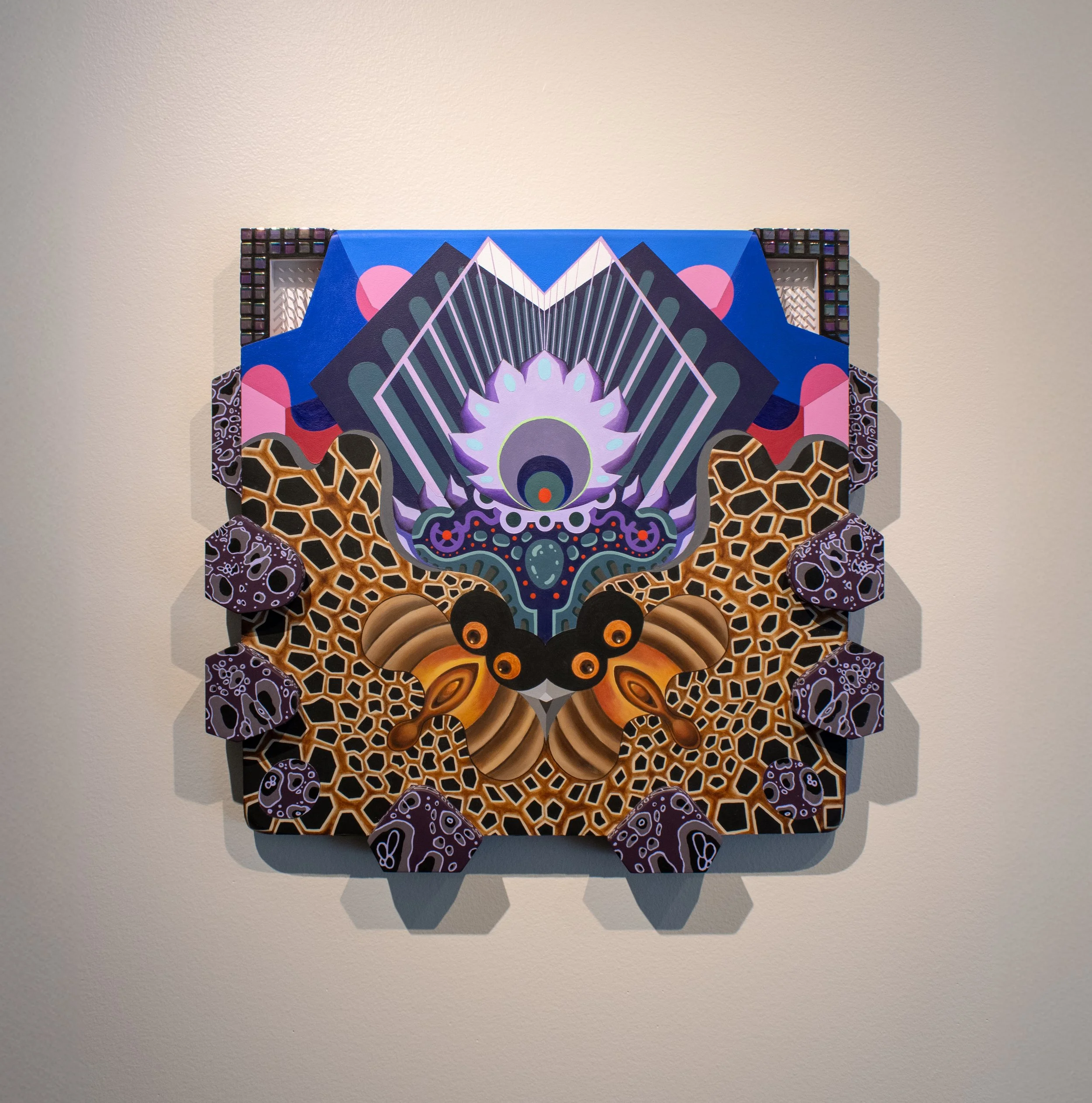
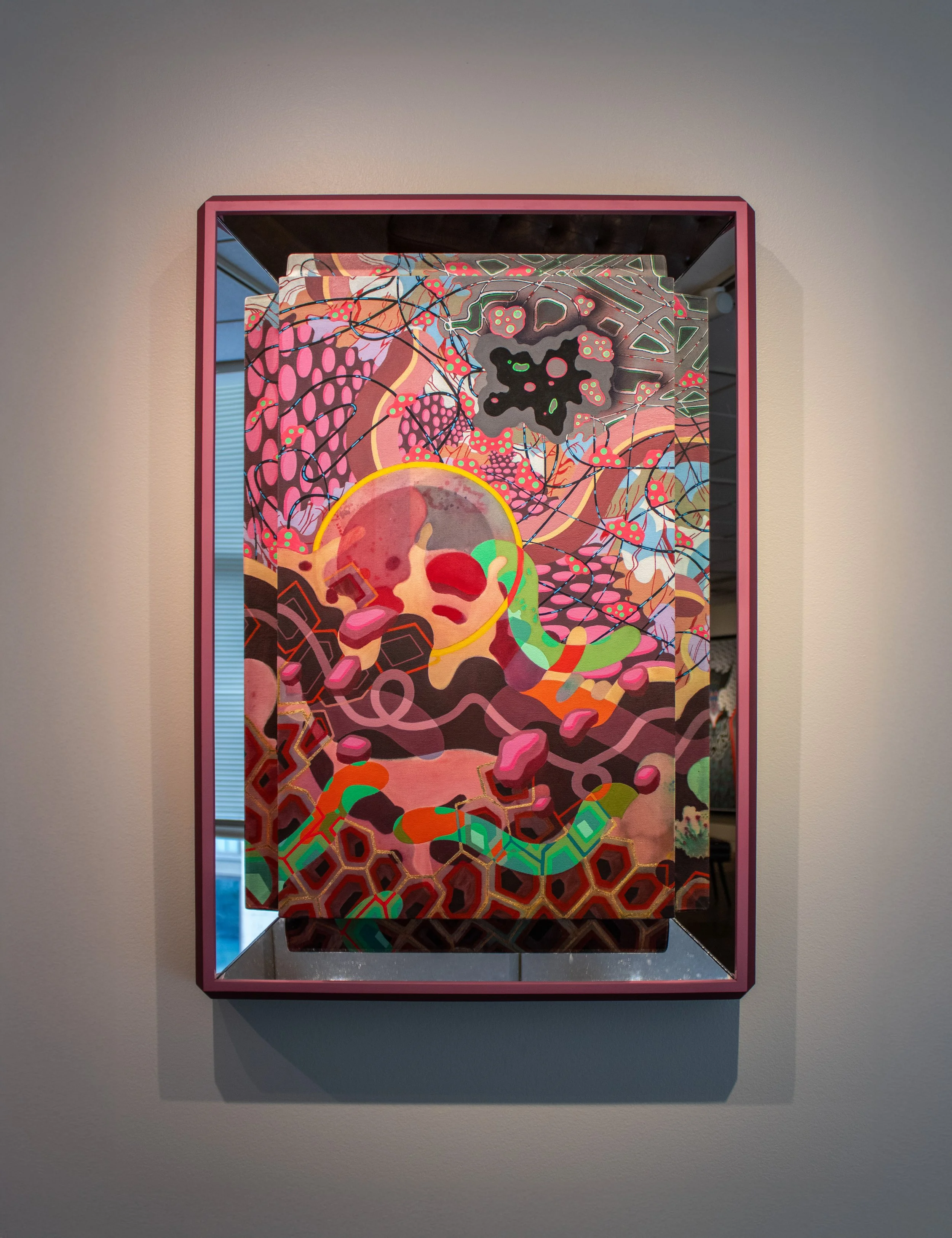
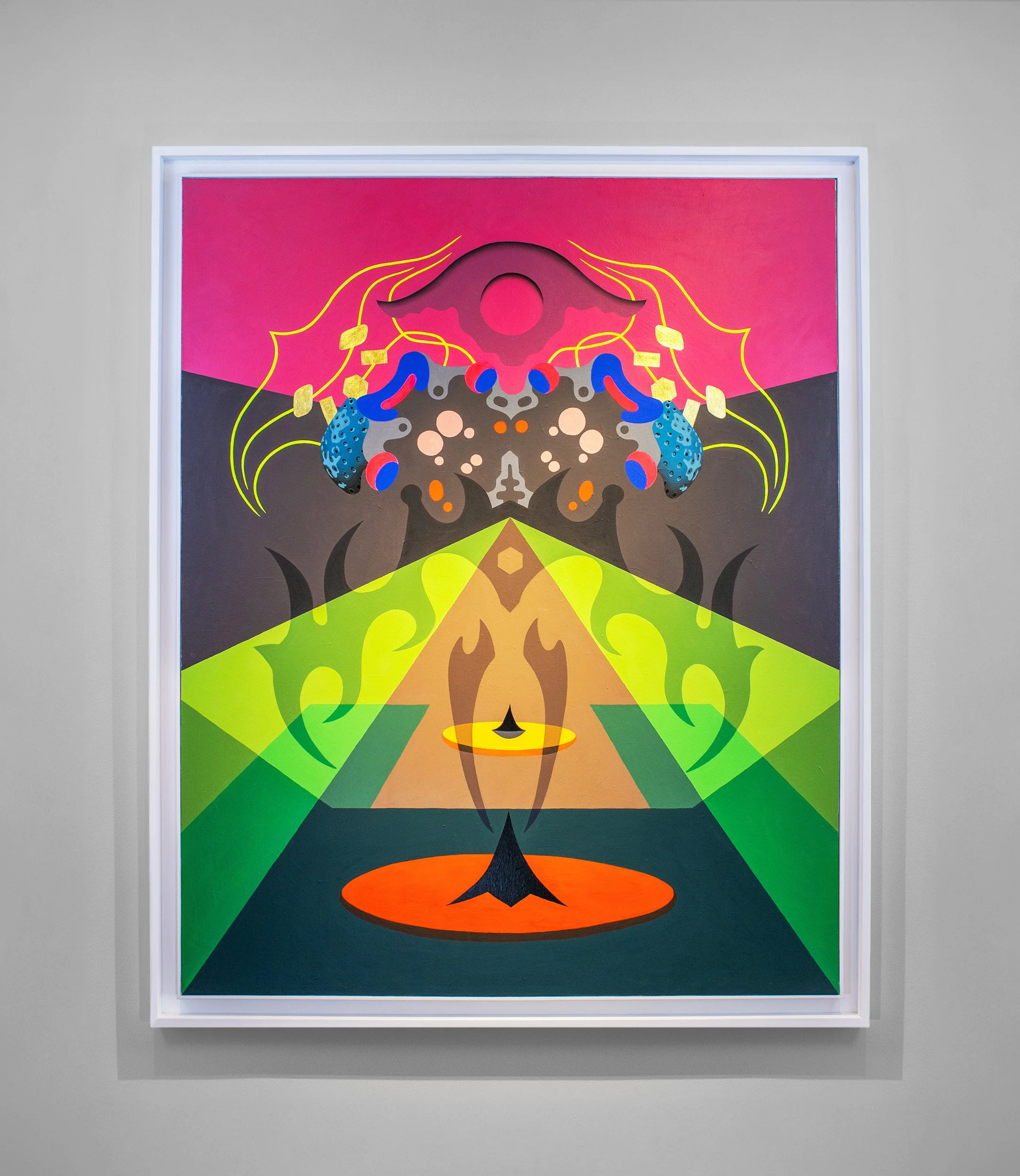
Cadejo - Parenthesis 1, Acrylic and gold leaf on canvas, 67 3/4 in x 54 in, 2023.
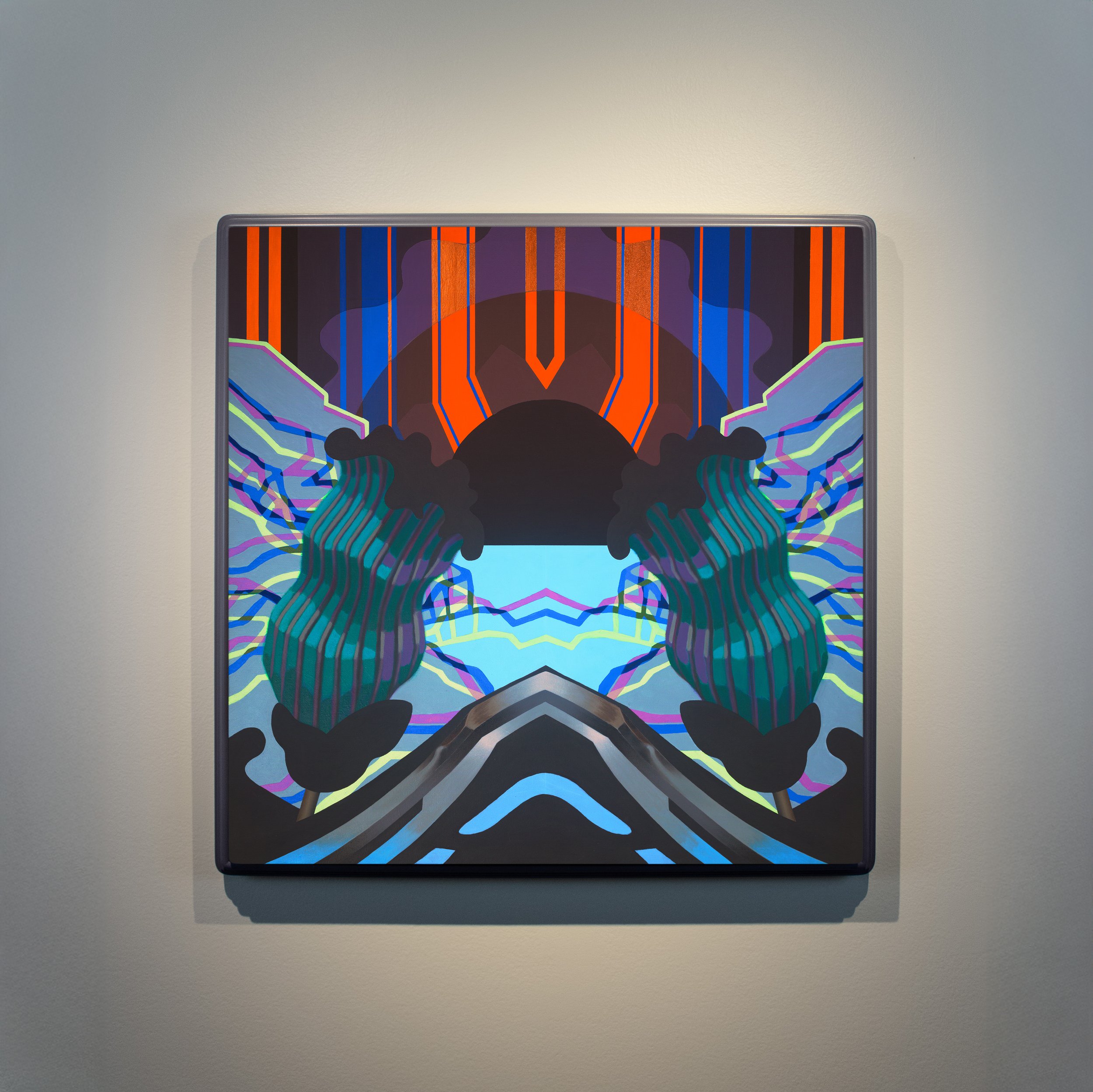
Cadejo - Parenthesis 2, Acrylic on canvas, 67 3/4 in x 54 in, 2023.
Parentheses 1 & 2 stand as the beginning and end of Cadejo. We built a large custom double-sided painting easel. We stretched two large canvases on each side. This way of operating allowed for each piece to progress simultaneously and kept our momentum flowing. To further push the momentum, we added the notion of time. One day, we set timers and worked timed intervals, rotating the easel after each session. By the end of the day, both canvases were fully covered with marks, capturing our attempts to fully conceptualize ideas.
In the week that followed, we began to edit by discussing which marks and ideas should stay and which should be removed. At this point of the process, with the information that was left, we began a dialogue of pushing and pulling to determine the state of success, content, and finish. The result led us to two beings that we believe found us.
Cadejo - La Ruleta, Acrylic, watercolor, and gold leaf on canvas, 29 7/8 in x 18 in, 2024.
La Ruleta was meant to be a piece about creating effects with transparency. Instead, it brought transparency to our egos. There was a lot of rule-breaking and disrespecting each other by covering over each other’s marks and ideas. The final input in terms of direction was agreed to be decided by conducting a voting poll on social media. Even though this piece was difficult for us, it is one of our dearest ones because it taught us how to communicate better and respect each other. It's a work of art that broke down our egos and let our personalities flow better, which helped with the remaining pieces of Cadejo.
Cadejo - Anything Goes 1, Acrylic on canvas, 30 in x 30 in, 2024.
Unlike the other pieces in the series that have heavily structured sets of restrictions or rules,
Anything Goes 1was refreshing, characterized by the absence of guidelines and complete freedom in decision-making.
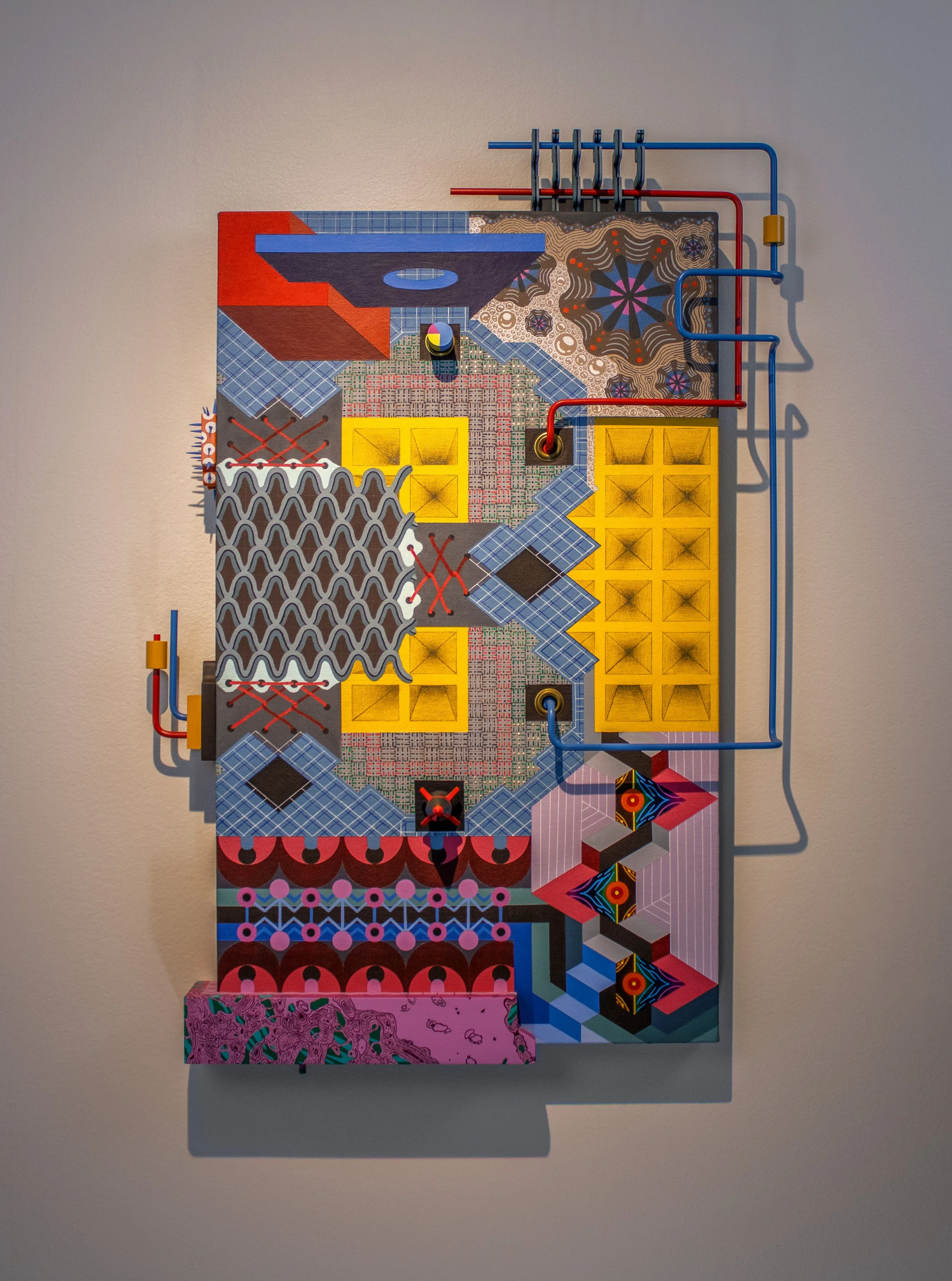
Cadejo - Patches,Acrylic, metal, graphite, and wood on canvas, 29 in x 18 in x 4 5/8 in, 2025.
For Patches, we agreed to work in a grid format. The canvas was dissected into equally even squares. Each square was classified as a patch that must represent each other’s individuality.
Cadejo - Object, Acrylic and gold leaf on canvas, 29 7/8 in x 18 in, 2025.
Object melds together our differing perspectives on objecthood, exploring how an object can imply function, interact with its environment, or convey presence through form and context.
Cadejo - Rock, paper, scissors, Acrylic and pink gold leaf on canvas, 29 7/8 in x 18 in, 2025.
In Rock, paper, scissors, I proposed choosing a color and restricting the palette to only this color and its shades. Fredy expanded this notion by adding the restriction of not entering each other’s sections and the idea of expanding the palette to include additional tones.
Fredy had the idea of playing the game of rock, paper, scissors to decide who would make the next move on the piece. We tracked the winning and losing with tally marks that were written down on the back of the canvas.
Ultimately, the winner was the player that made the most decisions and marks on the canvas. However, if one of the players didn’t want to play anymore, but the other still did, then the player that wanted to continue had to persuade the other, so the game could continue. When both players agreed to stop the game, it was game-over and the piece was finished.
Cadejo - Tape, Acrylic, wood, glass on masonite board, 21 1/4 in x 20 3/8 in x 2 3/16 in, 2025.
The premise forTape was to work on a portion of the panel, then tape it and seal the edges with a matte medium, so no paint could bleed. The piece was passed between each other and the process of taping and sealing the edges was repeated many times. When the piece was fully taped it was finished, and we proceeded to unveil the big reveal to see what we had unknowingly been creating.